
Pregnancy Ultrasound Thrissur: Understanding Safe and Accurate Prenatal Imaging

Pregnancy is a unique journey that involves continuous monitoring of both maternal health and fetal development. One of the most important diagnostic tools used throughout pregnancy is ultrasound imaging. If you are looking for a reliable Pregnancy Ultrasound Thrissur service, understanding how pregnancy ultrasounds work and why they are important can help you feel more confident about your prenatal care.
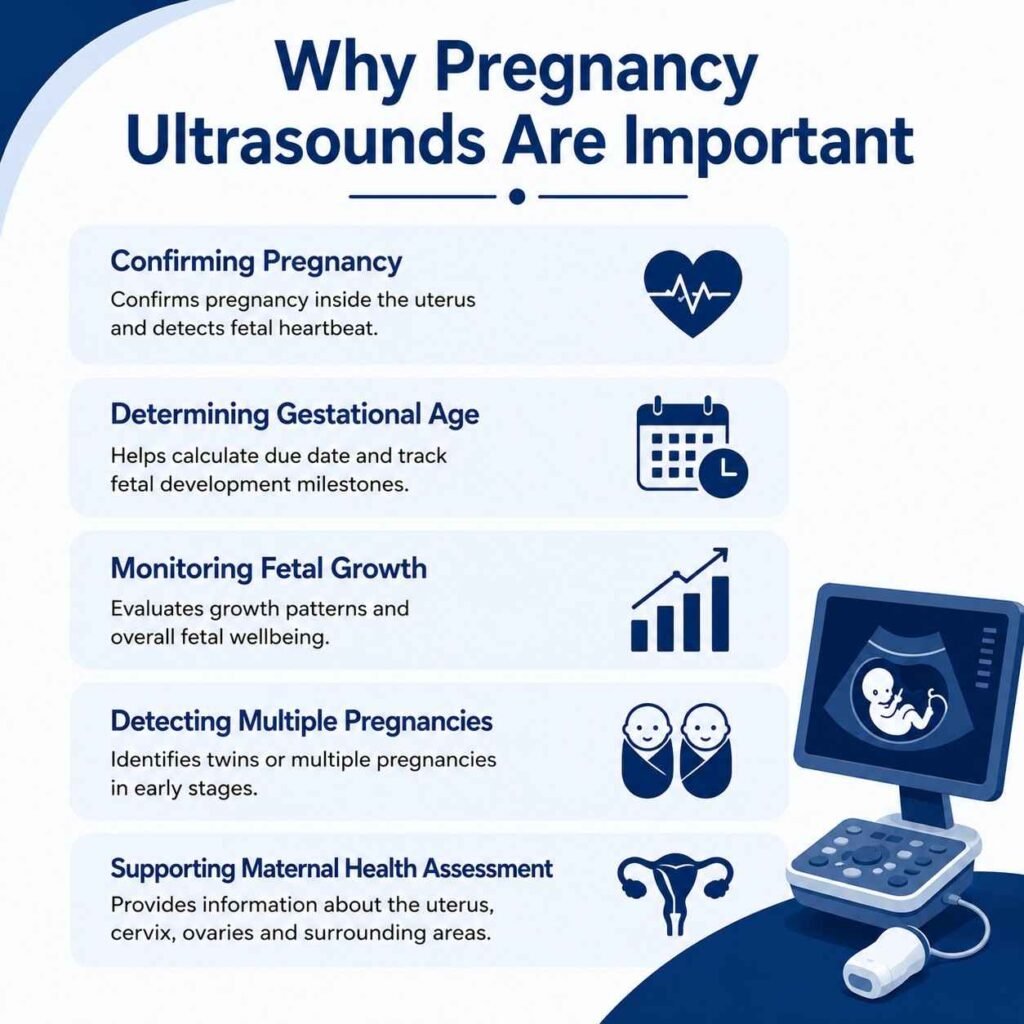
Pregnancy ultrasounds provide valuable information about fetal growth, development, wellbeing, and overall pregnancy progress. From confirming an early pregnancy to monitoring the baby’s development during later stages, ultrasound examinations play an essential role in modern prenatal healthcare.
What Is a Pregnancy Ultrasound?
A pregnancy ultrasound is a non-invasive imaging procedure that uses high-frequency sound waves to create real-time images of the developing baby and surrounding structures inside the uterus.
Unlike imaging techniques that use radiation, ultrasound relies on sound waves, making it a widely used tool throughout pregnancy.
A Pregnancy Ultrasound Thrissur evaluation may help assess:
- Fetal growth and development
- Pregnancy viability
- Fetal heartbeat
- Gestational age
- Placental position
- Amniotic fluid levels
- Multiple pregnancies
- Maternal pelvic structures
These assessments help healthcare providers monitor pregnancy progression and provide appropriate medical guidance when needed. For a broader understanding of pregnancy scanning and its role in prenatal care, learn more about pregnancy scanning services.
Types of Pregnancy Ultrasound Examinations
Different ultrasound scans may be recommended depending on the stage of pregnancy and clinical requirements.
Early Pregnancy Ultrasound
This scan is commonly performed during the first trimester to:
- Confirm pregnancy
- Detect fetal heartbeat
- Assess viability
- Estimate gestational age
- Identify multiple pregnancies
Women seeking early prenatal evaluation may benefit from learning more about Early Pregnancy Scan Thrissur services.
Dating Scan
A dating scan helps determine:
- Pregnancy duration
- Estimated due date
- Fetal development stage
Nuchal Translucency Scan
This first-trimester scan may be used as part of prenatal screening assessments.
Anomaly Scan
Typically performed during the second trimester, an anomaly scan evaluates fetal anatomy and development in greater detail.
Growth Scan
Growth scans monitor fetal size, development, and wellbeing throughout later stages of pregnancy.
What to Expect During a Pregnancy Ultrasound
Understanding the process can help reduce anxiety before the examination.
Before the Ultrasound
Preparation depends on the type of scan being performed.
Patients may be advised to:
- Drink water before the appointment
- Wear comfortable clothing
- Bring previous scan reports if available
During the Procedure
A trained healthcare professional performs the examination using specialized ultrasound equipment.
The procedure is generally:
- Safe
- Comfortable
- Non-invasive
- Painless
Real-time images are generated and reviewed during the examination.
After the Scan
Following the ultrasound, findings are reviewed and explained based on the examination performed.
Additional follow-up evaluations may be recommended if required.
Who May Need a Pregnancy Ultrasound?
A Pregnancy Ultrasound Thrissur examination may be recommended for:
- Women with a confirmed pregnancy
- Early pregnancy evaluation
- Pregnancy dating
- Monitoring fetal growth
- High-risk pregnancies
- Multiple pregnancies
- Follow-up assessments
- Evaluation of pregnancy-related symptoms
Regular ultrasounds support comprehensive prenatal monitoring throughout pregnancy.
Benefits of Pregnancy Ultrasound
Early Reassurance
Visualizing fetal development and detecting a heartbeat can provide reassurance during early pregnancy.
Accurate Pregnancy Monitoring
Ultrasound allows healthcare providers to track fetal growth and development over time.
Improved Pregnancy Planning
Accurate information helps guide prenatal care and follow-up recommendations.
Non-Invasive Evaluation
Ultrasound examinations do not involve radiation exposure.
Timely Detection of Concerns
Certain pregnancy-related conditions can be identified earlier, supporting appropriate medical management.
How Pregnancy Ultrasounds Support Prenatal Care
Pregnancy ultrasounds are an important component of comprehensive prenatal healthcare.
These examinations help:
- Monitor fetal development
- Confirm pregnancy progression
- Support maternal health assessment
- Guide medical decision-making
- Detect certain concerns early
- Provide reassurance to expectant parents
Regular imaging assessments allow healthcare providers to track pregnancy milestones and recommend appropriate follow-up care.
What Happens During Your Consultation?
Before scheduling a pregnancy ultrasound, healthcare professionals may discuss:
Medical History
Information regarding previous pregnancies, medical conditions, and relevant health concerns is reviewed.
Pregnancy Symptoms
Current symptoms and pregnancy progression may be assessed.
Recommended Ultrasound Type
The most appropriate ultrasound examination is selected based on gestational age and clinical requirements.
Follow-Up Planning
Additional scans or evaluations may be recommended when necessary.
Conclusion
A Pregnancy Ultrasound Thrissur service plays an essential role in monitoring fetal development, assessing maternal health, and supporting informed prenatal care decisions. From confirming pregnancy and estimating due dates to tracking growth and evaluating overall wellbeing, ultrasound examinations provide valuable information throughout pregnancy. Choosing an experienced diagnostic centre with qualified specialists and advanced imaging technology can help ensure accurate assessments and a positive pregnancy care experience for expectant mothers and their families.
Pregnancy ultrasounds play an important role in monitoring fetal development, assessing maternal wellbeing, and supporting informed prenatal care decisions. For additional information about pregnancy ultrasound scans during pregnancy, readers can refer to trusted medical resources that explain the purpose, timing, and benefits of different prenatal ultrasound examinations.