
Heart Checkup in Thrissur: Why Regular Cardiac Evaluation Matters for a Healthy Life
Heart health is one of the most important aspects of overall well-being, yet many heart conditions develop silently without causing noticeable symptoms in their early stages. Choosing a heart checkup in Thrissur is one of the most effective ways to detect potential heart problems before they become serious. Whether you have existing risk factors or simply want to take a proactive approach to your health, regular cardiac evaluations can provide valuable insights into your heart’s condition and help you make informed decisions about your lifestyle and treatment.
A comprehensive heart checkup in Thrissur includes a detailed assessment of your cardiovascular health using modern diagnostic tests such as Electrocardiogram (ECG), 2D Echocardiogram, Treadmill Test (TMT), Holter Monitoring, ambulatory cardiac monitoring, and other investigations when required. These evaluations help identify potential heart conditions at an early stage, assess individual risk factors, and support timely medical intervention. Regular heart checkups, combined with healthy lifestyle choices, play an important role in preventing serious cardiovascular complications and maintaining long-term heart health. Whether you have existing risk factors or simply want to take a proactive approach to your health, regular cardiac evaluations can provide valuable insights into your heart’s condition. If you’d like to learn more about preventive cardiac assessments, explore our Heart Screening guide.
What is a Heart Checkup?
A heart checkup in Thrissur is a comprehensive evaluation of your cardiovascular health. It involves a combination of medical history assessment, physical examination, and diagnostic tests that help determine how well your heart is functioning.
Unlike emergency cardiac treatment, a heart checkup focuses on identifying potential problems before they lead to serious complications such as heart attacks, heart failure, or stroke. Early diagnosis allows healthcare professionals to recommend appropriate lifestyle modifications, medications, or additional investigations when necessary.
A comprehensive heart checkup in Thrissur helps evaluate several important aspects of heart health, including:
- Heart rhythm
- Heart muscle function
- Heart valve performance
- Blood circulation
- Blood pressure levels
- Cardiovascular risk factors
Modern cardiac diagnostics make it possible to detect abnormalities even before symptoms become apparent, making preventive care an essential part of maintaining long-term heart health.
Why is a Heart Checkup Important?
Many cardiovascular diseases progress gradually over several years without causing obvious warning signs. By the time symptoms develop, the condition may already require extensive medical management.
Choosing a heart checkup in Thrissur enables early detection of heart disease and allows timely intervention before permanent damage occurs.
Some of the major benefits include:
Early Detection of Heart Conditions
Routine cardiac evaluations can identify abnormalities in heart rhythm, blood flow, valve function, and heart muscle performance before complications arise.
Prevention of Serious Cardiac Events
Detecting cardiovascular disease early significantly reduces the risk of heart attacks, stroke, and heart failure.
Better Treatment Planning
When problems are diagnosed at an early stage, treatment options are often simpler, more effective, and less invasive.
Monitoring Existing Heart Conditions
Patients with hypertension, diabetes, or previous cardiac problems benefit from regular monitoring to ensure their condition remains under control.
Peace of Mind
For individuals without symptoms, a heart checkup in Thrissur provides reassurance about their cardiovascular health while identifying hidden risks that may otherwise go unnoticed.
Preventive cardiac care plays an essential role in improving both life expectancy and overall quality of life.
Who Should Get a Heart Checkup?
A heart checkup in Thrissur is beneficial for people of all age groups, particularly those with known cardiovascular risk factors.
Adults Above 40 Years
As people age, the likelihood of developing heart disease gradually increases. Regular screening becomes increasingly important after the age of forty.
Individuals with High Blood Pressure
Hypertension places continuous stress on the heart and blood vessels, increasing the risk of heart attacks, stroke, and kidney disease.
People Living with Diabetes
Diabetes can damage blood vessels over time and significantly increase the risk of cardiovascular disease. Routine heart evaluations help detect complications early.
Individuals with High Cholesterol
Elevated cholesterol levels contribute to plaque formation inside arteries, reducing blood flow and increasing the likelihood of coronary artery disease.
Smokers
Smoking damages blood vessels, increases blood pressure, and accelerates the development of cardiovascular disease. Regular heart checkup in Thrissur appointments can help assess the impact of these risks.
People with Obesity
Excess body weight increases the workload on the heart and is closely associated with hypertension, diabetes, and high cholesterol.
Family History of Heart Disease
If close relatives have experienced heart disease at a young age, your own risk may be higher. Preventive cardiac screening becomes especially important.
Individuals with a Sedentary Lifestyle
Lack of regular physical activity contributes to obesity, poor circulation, and cardiovascular disease. Routine evaluations help monitor heart health before symptoms appear.
Even healthy individuals without obvious risk factors can benefit from periodic heart checkup in Thrissur services as part of preventive healthcare.
Common Signs That Indicate You Need a Heart Checkup
While many heart diseases develop silently, certain symptoms should never be ignored. If you experience any of the following signs, scheduling a heart checkup in Thrissur is strongly recommended.
Chest Pain or Discomfort
Persistent chest pain, pressure, tightness, or discomfort during physical activity or at rest may indicate reduced blood flow to the heart.
Shortness of Breath
Difficulty breathing while walking, climbing stairs, exercising, or even resting can sometimes signal underlying cardiovascular disease.
Irregular Heartbeat
Palpitations, skipped beats, rapid heartbeat, or unusual heart rhythms should be evaluated using appropriate cardiac diagnostic tests.
Fatigue
Unexplained tiredness, especially when performing routine daily activities, may indicate reduced heart function.
Dizziness or Fainting
Frequent dizziness, light-headedness, or fainting episodes may occur due to abnormal heart rhythms or reduced blood flow to the brain.
Swelling in the Legs or Feet
Fluid accumulation in the lower limbs can sometimes be associated with heart failure or poor circulation.
High Blood Pressure
Even without symptoms, consistently elevated blood pressure increases the risk of heart disease and should be monitored regularly.
Ignoring these warning signs can delay diagnosis and treatment. Early evaluation through a heart checkup in Thrissur helps identify the underlying cause and supports timely medical care.
What Does a Heart Checkup Include?
A comprehensive heart checkup in Thrissur combines clinical evaluation with advanced diagnostic investigations to provide a complete picture of your cardiovascular health.
Medical History Assessment
Your doctor reviews important details such as:
- Existing medical conditions
- Current medications
- Family history of heart disease
- Lifestyle habits
- Previous cardiac events
- Smoking and alcohol history
This information helps identify individual cardiovascular risk factors.
Physical Examination
A detailed examination includes assessment of:
- Heart sounds
- Pulse rate
- Blood pressure
- Oxygen saturation
- Body weight
- Signs of circulatory problems
Electrocardiogram (ECG)
An ECG records the electrical activity of the heart and helps detect:
- Arrhythmias
- Previous heart attacks
- Conduction abnormalities
- Heart enlargement
It is a quick, painless, and essential component of a routine heart checkup in Thrissur.
2D Echocardiogram
A 2D Echo uses ultrasound technology to evaluate:
- Heart chambers
- Valve function
- Pumping efficiency
- Blood flow patterns
- Structural abnormalities
This non-invasive investigation provides detailed information about heart function.
Treadmill Test (TMT)
A treadmill stress test evaluates how the heart performs during physical activity.
It helps identify:
- Reduced blood supply to the heart
- Exercise-induced symptoms
- Hidden coronary artery disease
- Exercise tolerance
Holter Monitoring
Holter Monitoring records the heart’s rhythm continuously for 24 hours or longer.
It is useful for detecting:
- Intermittent arrhythmias
- Palpitations
- Silent rhythm disturbances
- Symptoms that may not appear during a routine ECG
Benefits of Regular Heart Checkups
Scheduling a heart checkup in Thrissur on a regular basis is one of the most effective ways to protect your cardiovascular health. Heart diseases often progress gradually, and many conditions remain unnoticed until they become severe. Routine cardiac evaluations allow doctors to detect early warning signs, monitor existing health conditions, and recommend timely interventions that can significantly improve long-term outcomes.
Early Detection of Heart Disease
One of the biggest advantages of a heart checkup in Thrissur is the ability to identify heart problems before symptoms become noticeable. Conditions such as coronary artery disease, heart valve disorders, irregular heart rhythms, and high blood pressure can often be detected during routine screening.
Early diagnosis provides more treatment options and helps prevent disease progression.
Better Management of Existing Conditions
Individuals living with hypertension, diabetes, or high cholesterol require regular monitoring to reduce their risk of cardiovascular complications. A structured heart checkup in Thrissur helps doctors assess whether current treatments are working effectively and whether any adjustments are needed.
Reduced Risk of Heart Attack and Stroke
Heart attacks and strokes are frequently associated with unmanaged cardiovascular risk factors. Routine evaluations help identify these risks early, allowing preventive measures such as lifestyle modifications, medications, and ongoing monitoring.
Personalized Preventive Care
Every individual has unique health risks based on age, family history, medical conditions, and lifestyle. A heart checkup in Thrissur provides personalized recommendations that support long-term heart health.
These recommendations may include:
- Dietary improvements
- Regular physical activity
- Weight management
- Blood pressure control
- Cholesterol management
- Diabetes management
- Smoking cessation
Improved Quality of Life
Maintaining good cardiovascular health supports better energy levels, improved physical fitness, and reduced anxiety about hidden heart conditions. Regular cardiac assessments allow individuals to remain proactive about their health rather than waiting for symptoms to appear.
Continuous Heart Monitoring
Certain patients require long-term observation to detect intermittent abnormalities that may not be visible during a routine consultation. Advanced diagnostic services such as Holter Monitoring and Ambulatory Monitoring provide valuable information about heart rhythm over an extended period.
Understanding the Risk Factors for Heart Disease
Heart disease can affect anyone, but certain factors significantly increase the likelihood of developing cardiovascular problems. Understanding these risk factors helps individuals make informed lifestyle choices and highlights the importance of scheduling a heart checkup in Thrissur for early detection and preventive care.
High Blood Pressure
High blood pressure, also known as hypertension, forces the heart to work harder than normal. Over time, this can damage blood vessels and increase the risk of heart attack, stroke, and heart failure. Regular monitoring during a heart checkup in Thrissur helps identify elevated blood pressure before it causes complications.
High Cholesterol
Excess cholesterol can accumulate inside the arteries, narrowing blood vessels and reducing blood flow to the heart. This condition often develops without symptoms, making routine heart evaluations essential for identifying cardiovascular risk.
Diabetes
People living with diabetes have a higher chance of developing heart disease because elevated blood sugar levels can damage blood vessels over time. A routine heart checkup in Thrissur helps monitor heart health and supports early management of diabetes-related cardiovascular risks.
Smoking and Tobacco Use
Smoking damages blood vessels, raises blood pressure, reduces oxygen supply, and accelerates the buildup of plaque inside arteries. Stopping tobacco use, along with regular cardiac evaluations, can greatly improve long-term heart health.
Obesity
Excess body weight places additional strain on the heart and is often associated with conditions such as hypertension, diabetes, and high cholesterol. Maintaining a healthy weight is an important step toward reducing cardiovascular risk.
Lack of Physical Activity
A sedentary lifestyle contributes to poor cardiovascular fitness and increases the likelihood of heart disease. Regular exercise improves circulation, strengthens the heart, and supports overall cardiovascular health.
Family History
Individuals with a family history of heart disease may have a greater risk of developing similar conditions. Although genetics cannot be changed, early screening through a heart checkup in Thrissur can help identify problems before symptoms appear.
Chronic Stress
Long-term stress may contribute to high blood pressure and unhealthy lifestyle habits. Managing stress through relaxation techniques, regular exercise, and sufficient rest can help support better heart health.
Understanding these risk factors allows individuals to take preventive measures and seek timely medical advice before heart disease progresses.
Preparing for a Heart Checkup
Preparing for a heart checkup in Thrissur is generally simple, but following a few recommendations can help ensure accurate test results and a smooth evaluation process.
Carry Previous Medical Records
Bring any previous ECGs, Echocardiograms, blood test reports, or cardiac investigation results. Comparing past and present findings helps monitor changes in heart health.
Share Your Medical History
Inform your healthcare provider about any existing medical conditions, previous surgeries, medications, allergies, or ongoing treatments.
Wear Comfortable Clothing
If your evaluation includes a Treadmill Test (TMT), wearing comfortable clothing and suitable footwear is recommended.
Follow Test Instructions
Some investigations may require fasting or avoiding caffeine before the procedure. Follow the instructions provided before your appointment.
Discuss Your Symptoms
Inform your doctor if you have experienced:
- Chest pain
- Shortness of breath
- Palpitations
- Fatigue
- Dizziness
- Swelling in the legs
Providing complete information helps determine the most appropriate diagnostic tests.
What to Expect During Your Heart Checkup
Many people feel anxious before their first heart checkup in Thrissur, but most evaluations are straightforward, comfortable, and non-invasive.
Medical History Review
The consultation usually begins with a discussion about your symptoms, lifestyle, family history, and existing health conditions.
Physical Examination
Your healthcare provider may assess:
- Blood pressure
- Heart rate
- Pulse
- Oxygen saturation
- Body weight
- Heart and lung sounds
Diagnostic Tests
Depending on your health profile, the doctor may recommend investigations such as:
- Electrocardiogram (ECG)
- 2D Echocardiogram
- Treadmill Test (TMT)
- Holter Monitoring
- Ambulatory Cardiac Monitoring
- Ultrasound and Colour Doppler Studies
These tests provide valuable information about heart rhythm, heart function, blood circulation, and overall cardiovascular health.
Review of Findings
Once the evaluation is complete, the doctor explains the results and recommends lifestyle changes, medications, further investigations, or follow-up visits if necessary.
Most heart checkup procedures are painless, non-invasive, and completed within a relatively short time.
Heart Checkups for Different Age Groups
A heart checkup in Thrissur is beneficial for people at every stage of life, with screening recommendations varying based on age and individual health risks.
Young Adults
Preventive heart evaluations may help identify inherited or congenital heart conditions, especially in individuals with a family history of cardiovascular disease or those experiencing symptoms.
Middle-Aged Adults
As cardiovascular risk increases with age, routine screening becomes increasingly important. Regular evaluations help detect hypertension, coronary artery disease, and other heart conditions before complications arise.
Older Adults
Older adults benefit from periodic heart assessments that monitor heart function, valve disorders, heart rhythm abnormalities, and age-related cardiovascular changes.
Early diagnosis supports better treatment planning and improved quality of life.
Lifestyle Habits That Support Heart Health
A healthy lifestyle complements every heart checkup in Thrissur by helping reduce cardiovascular risk and promoting long-term wellness.
Eat a Balanced Diet
Choose foods rich in nutrients, including fruits, vegetables, whole grains, lean proteins, and healthy fats. Limit foods high in saturated fats, salt, and added sugars.
Stay Physically Active
Aim for at least 150 minutes of moderate physical activity each week. Walking, swimming, cycling, and other forms of exercise improve heart function and circulation.
Maintain a Healthy Weight
Maintaining an appropriate body weight reduces strain on the heart and lowers the risk of several chronic diseases.
Avoid Smoking
Stopping smoking significantly lowers the risk of cardiovascular disease and improves overall health.
Manage Stress
Practice stress-reduction techniques such as meditation, deep breathing, yoga, or spending time with family and friends.
Get Enough Sleep
Adults should aim for seven to nine hours of quality sleep every night to support heart health and overall well-being.
Control Existing Health Conditions
Managing diabetes, hypertension, and high cholesterol with regular medical follow-up and lifestyle changes helps protect your heart over the long term.
Why Regular Heart Checkups Matter
Many heart conditions remain silent until they become severe. Regular heart checkup in Thrissur appointments help identify hidden cardiovascular risks, monitor existing health conditions, and evaluate how well your heart is functioning.
Routine heart evaluations offer several advantages:
- Early identification of heart disease
- Timely medical intervention
- Better management of chronic conditions
- Reduced risk of heart attack and stroke
- Personalized preventive care
- Improved long-term quality of life
Combining regular heart checkups with healthy lifestyle habits provides one of the most effective approaches to maintaining cardiovascular health.
Conclusion
A heart checkup in Thrissur is an essential step toward maintaining good cardiovascular health and preventing serious heart conditions. Regular cardiac evaluations help identify risk factors, detect heart disease at an early stage, and provide valuable information that supports timely medical care. Whether you have existing health concerns or simply want to take a proactive approach to your well-being, routine heart checkups can make a significant difference in protecting your long-term health.
When combined with healthy eating, regular exercise, stress management, adequate sleep, and ongoing medical guidance, periodic heart assessments contribute to a healthier heart and a better quality of life. Prioritizing preventive cardiac care today can help reduce the risk of future cardiovascular complications and ensure that your heart continues to function at its best.
To learn more about heart disease prevention and maintaining cardiovascular wellness, visit the American Heart Association for evidence-based information and heart health resources.
Frequently Asked Questions
A heart checkup is recommended for adults over 40, individuals with high blood pressure, diabetes, high cholesterol, obesity, a family history of heart disease, smokers, and anyone experiencing symptoms such as chest pain or shortness of breath.
A comprehensive heart checkup may include an Electrocardiogram (ECG), 2D Echocardiogram, Treadmill Test (TMT), Holter Monitoring, blood pressure assessment, and other diagnostic tests based on your symptoms and medical history.
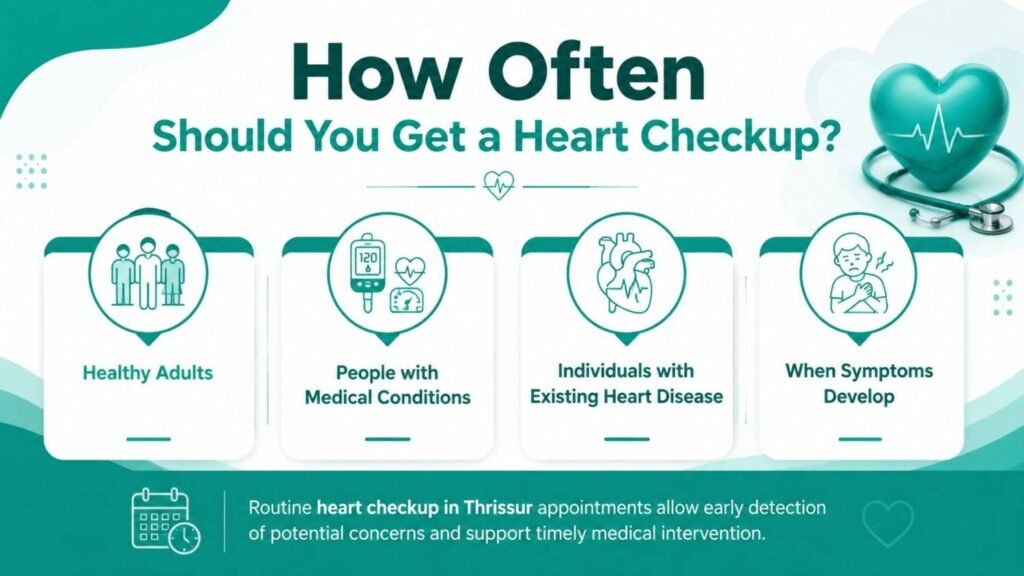
The frequency depends on your age, lifestyle, medical history, and risk factors. Your doctor can recommend an appropriate screening schedule based on your overall cardiovascular health.
Yes. Many heart conditions develop silently in the early stages. Regular heart evaluations can help detect potential problems early, allowing timely treatment and better long-term outcomes.
The duration depends on the investigations recommended. Basic assessments are often completed within an hour, while tests such as Holter Monitoring may require continuous recording over 24 hours.
No. Most cardiac diagnostic tests, including ECG, 2D Echocardiography, and Holter Monitoring, are non-invasive, painless, and completed with minimal discomfort.
Symptoms such as chest pain, shortness of breath, irregular heartbeat, dizziness, unexplained fatigue, fainting, or swelling in the legs should be evaluated by a healthcare professional as soon as possible.
Carry previous medical records, wear comfortable clothing, inform your doctor about any medications you take, and follow any preparation instructions provided before the tests.
Yes. Routine cardiac evaluations help identify risk factors early and support timely lifestyle changes or treatment, reducing the risk of heart attacks, stroke, and other cardiovascular complications.
Preventive heart care focuses on identifying cardiovascular risks before they become serious. Combined with healthy lifestyle habits and regular medical evaluations, it helps maintain long-term heart health and improves overall well-being.