
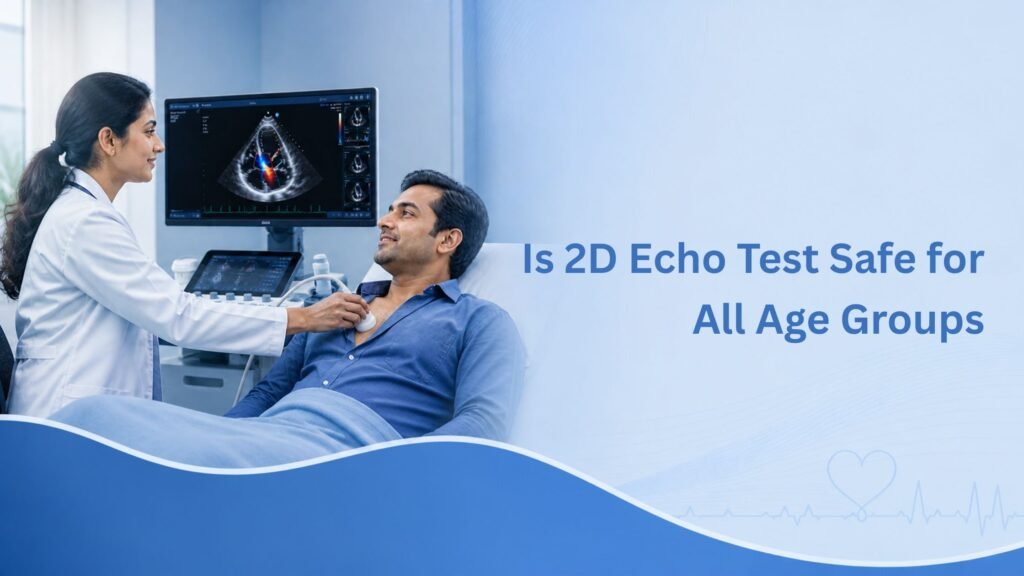
The 2D Echo test is widely used in cardiac evaluation because it is non-invasive and does not involve radiation. A common concern among patients is whether this test is suitable for individuals of different ages, including children and elderly individuals. Understanding the safety and application of this test helps patients feel more confident about undergoing cardiac evaluation.
This blog explains how the 2D Echo test works, its safety across age groups, and why it is considered a reliable diagnostic tool for heart assessment.
Table of Contents
- What is a 2D Echo Test
- How the Test Works
- Safety of 2D Echo Test
- Use in Infants and Children
- Use in Adults
- Use in Elderly Individuals
- Benefits of the Test
- When is the Test Recommended
- Preparation for the Test
- What to Expect During the Procedure
- Accuracy and Reliability
- Conclusion
1. What is a 2D Echo Test
A 2D Echo test is an ultrasound-based imaging procedure that provides real-time images of the heart. It helps evaluate heart structure, valve function, and blood flow patterns.
The test is commonly used for diagnosing heart conditions and monitoring ongoing cardiac health.
2. How the Test Works
The procedure uses a device called a transducer that sends sound waves into the chest. These waves reflect off the heart and create images on a monitor.
The process is simple and does not involve any invasive steps, making it suitable for repeated use.
3. Safety of 2D Echo Test
The 2D Echo test is considered safe because it does not use radiation. It relies on sound waves, which are harmless to the body.
There are no known long-term risks or side effects, making it suitable for individuals across different age groups.
4. Use in Infants and Children
The test is commonly used in infants and children to detect congenital heart conditions. Since it is painless and non-invasive, it can be safely performed even in newborns.
It helps identify structural abnormalities early and supports timely medical care.
5. Use in Adults
In adults, the test is used for diagnosing various heart conditions such as valve disorders, cardiomyopathy, and heart function issues.
It is often recommended for individuals with symptoms like chest discomfort, breathlessness, or irregular heartbeat.
6. Use in Elderly Individuals
The 2D Echo test is also safe for elderly individuals. It helps evaluate age-related heart changes and detect conditions such as valve disease or reduced heart function.
Regular monitoring supports better management of cardiac health in older adults.
7. Benefits of the Test
The 2D Echo test offers several advantages:
- Non-invasive and painless
- No radiation exposure
- Safe for repeated use
- Suitable for all age groups
- Provides real-time heart imaging
- Helps in early diagnosis
8. When is the Test Recommended
The test may be recommended in the following situations:
- Presence of heart-related symptoms
- Routine health checkups
- Monitoring known heart conditions
- Family history of cardiac disease
Early evaluation helps support better outcomes.
9. Preparation for the Test
Preparation for the 2D Echo test is usually simple:
- Wear comfortable clothing
- Follow any instructions if provided
- No fasting is required in most cases
10. What to Expect During the Procedure
During the test:
- The patient lies on an examination table
- A gel is applied to the chest
- A transducer is used to capture images
The test usually takes about twenty to thirty minutes and is completely painless.
11. Accuracy and Reliability
The 2D Echo test is widely trusted for its accuracy in evaluating heart structure and function. It provides clear and detailed images that help healthcare providers make informed decisions.
12. Conclusion
The 2D Echo test is safe for individuals across all age groups, including infants, adults, and elderly patients. Its non-invasive nature and lack of radiation make it a reliable option for cardiac evaluation.
Regular heart assessment using safe diagnostic tools helps in early detection and better management of heart conditions. For general heart health information, resources like the American Heart Association provide useful guidance.