
7 Vital Facts: What Happens If Baby Growth Is Below Average?
Pregnancy scans can sometimes show that a baby is measuring smaller than expected for the number of weeks of pregnancy. Naturally, this may leave parents wondering, What Happens If Baby Growth Is Below Average? A smaller measurement does not always indicate a serious problem. Some babies are naturally small and healthy, while others may require closer monitoring to ensure they are receiving enough oxygen and nutrients. A pregnancy scan in Thrissur can help healthcare professionals assess the baby’s measurements, growth pattern, placenta, amniotic fluid and general wellbeing.
Understanding the scan findings can help parents feel more informed and prepared. The next step usually depends on how small the baby measures, whether growth continues between scans and whether other test results are reassuring.
What Happens If Baby Growth Is Below Average?
When a scan suggests that the baby’s growth is below average, the healthcare professional usually reviews several measurements rather than depending on one number alone.
These measurements may include:
- Head circumference
- Abdominal circumference
- Femur or thigh-bone length
- Estimated fetal weight
- Amniotic fluid level
- Blood flow through the umbilical cord
- Placental appearance and position
The measurements are compared with expected growth ranges for the baby’s gestational age. The estimated fetal weight may also be plotted on a growth chart to show the baby’s percentile.
A baby measuring below the 10th percentile is generally described as small for gestational age. However, being small for gestational age does not automatically mean that the baby is unhealthy or growth restricted. Healthcare professionals must consider the growth trend, Doppler findings, maternal health and other scan results before deciding whether further care is required.
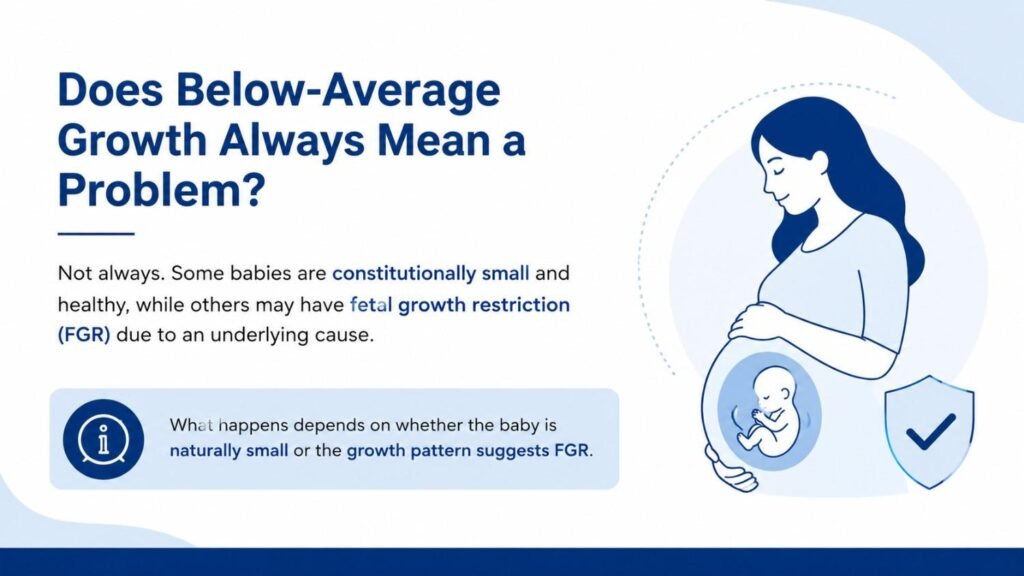
Does Below-Average Growth Always Mean a Problem?
No. Some babies are constitutionally small, meaning they are smaller because of natural characteristics such as parental height, body build or genetic factors.
A constitutionally small baby may:
- Continue growing steadily
- Have normal amniotic fluid
- Show normal blood flow on Doppler ultrasound
- Move normally
- Have no structural concerns
- Be born healthy despite having a lower birth weight
Fetal growth restriction is different. It means the baby may not be reaching its expected growth potential because of an underlying pregnancy, placental, maternal or fetal factor.
Therefore, when parents ask, What Happens If Baby Growth Is Below Average?, the answer depends on whether the baby is simply small or whether the growth pattern suggests fetal growth restriction.
Small for Gestational Age and Fetal Growth Restriction
These terms are related, but they do not always describe the same situation.
Small for Gestational Age
Small for gestational age, commonly shortened to SGA, usually refers to a baby whose estimated weight or abdominal measurement is below the expected range for gestational age.
Many SGA babies are naturally small and do not experience major health concerns. They may simply need additional scans to confirm that they continue growing steadily.
Fetal Growth Restriction
Fetal growth restriction, or FGR, occurs when a baby is not growing as expected inside the uterus. It may be suspected when:
- Estimated weight is significantly low
- Growth slows between two ultrasound examinations
- Abdominal growth is reduced
- Umbilical artery blood flow is abnormal
- Amniotic fluid is low
- Placental function appears reduced
- Other pregnancy concerns are present
The distinction is important because fetal growth restriction may require more frequent surveillance and, in some situations, planned delivery before the expected due date.
Types of Below-Average Fetal Growth
Healthcare professionals may describe fetal growth restriction according to when it develops and how the baby’s body measurements are affected.
Early-Onset Fetal Growth Restriction
Early-onset growth restriction is generally identified earlier in pregnancy. It may be associated with placental problems, maternal medical conditions, fetal structural differences, infections or chromosomal conditions.
Because the baby is still at an earlier stage of development, careful monitoring is required to balance the benefits of continuing the pregnancy against the risks of delivering too early.
Late-Onset Fetal Growth Restriction
Late-onset growth restriction develops or becomes noticeable during the later months of pregnancy.
It may be more difficult to identify because the baby can have an estimated weight within the lower part of the normal range while showing a slower growth rate or changes in blood flow.
Symmetrical Growth Restriction
In symmetrical growth restriction, the baby’s head, abdomen and limbs are all proportionately smaller than expected.
This pattern may begin early in pregnancy and may lead the doctor to consider developmental, genetic or infection-related causes, depending on the complete clinical picture.
Asymmetrical Growth Restriction
In asymmetrical growth restriction, the baby’s abdominal measurement may be smaller compared with the head measurement.
This can occur when placental function is reduced and the baby’s circulation prioritises blood flow to essential organs.
A growth pattern cannot be diagnosed safely from one measurement. A detailed ultrasound assessment and clinical review are necessary.
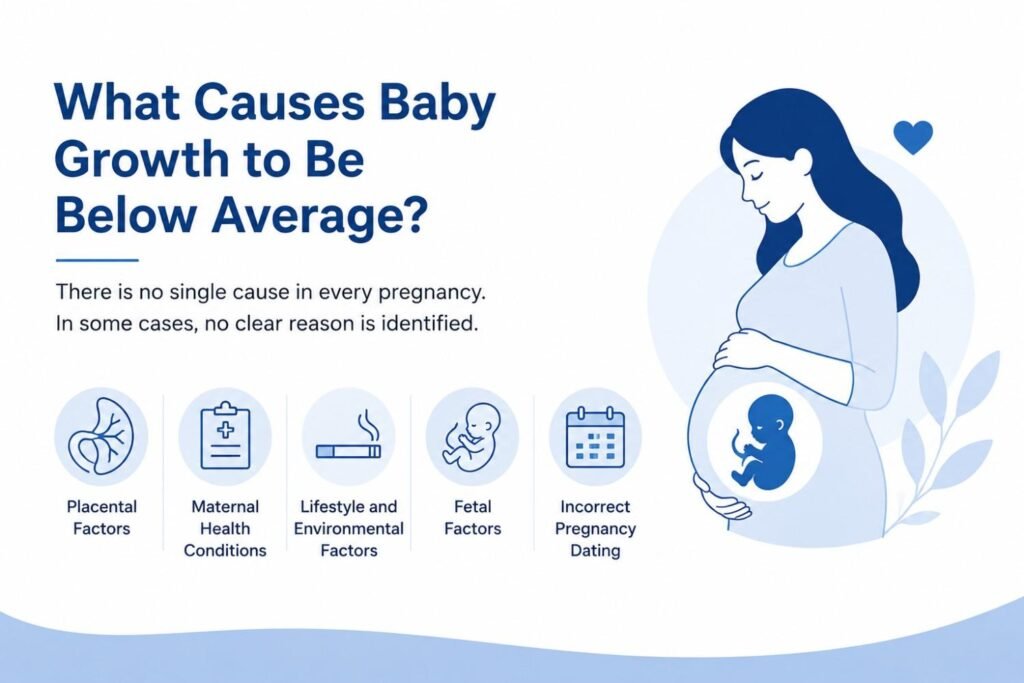
What Causes Baby Growth to Be Below Average?
There is no single cause in every pregnancy. In some cases, no clear reason is identified.
- Placental Factors
- Maternal Health Conditions
- Lifestyle and Environmental Factors
- Fetal Factors
- Incorrect Pregnancy Dating
Symptoms of Below-Average Baby Growth
Fetal growth restriction often causes no clear symptoms. Many cases are first suspected during a routine antenatal examination or ultrasound scan.
Possible signs that may lead to further assessment include:
- The uterus measuring smaller than expected
- Fundal height not increasing as expected
- Reduced or altered fetal movements
- Low maternal weight gain
- High blood pressure
- Abnormal urine test results
- A previous pregnancy affected by growth restriction
A small abdomen or limited maternal weight gain cannot confirm fetal growth restriction. Similarly, a pregnant woman may appear small while carrying a baby who is growing normally.
Reduced Baby Movement Requires Prompt Attention
Changes in fetal movement should not be ignored. Pregnant women should contact their maternity unit or healthcare professional promptly when the baby is moving less than usual or when the normal pattern of movement changes.
Parents should not wait for the next scheduled appointment when they are concerned about fetal movements. RCOG advises pregnant women to seek immediate assessment when their baby is not moving normally.
How Is Below-Average Baby Growth Diagnosed?
When discussing What Happens If Baby Growth Is Below Average?, it is important to understand that diagnosis may involve more than a routine scan.
- Review of Gestational Age
The healthcare professional first checks whether the pregnancy has been dated accurately. Early ultrasound records and menstrual history may be reviewed.
- Fetal Biometry
Ultrasound measurements are taken to estimate the baby’s size and weight. These measurements are placed on a growth chart and compared with previous results.
One small measurement may not confirm a problem. The pattern across repeated scans is often more informative.
- Growth Ultrasound
A growth scan may evaluate:
- Head size
- Abdominal size
- Femur length
- Estimated fetal weight
- Placental position
- Amniotic fluid
- Fetal movements
- Fetal presentation
- Doppler Ultrasound
Doppler ultrasound assesses blood flow in selected blood vessels. It may examine blood flow through the umbilical cord and, when clinically required, other fetal vessels.
Doppler findings help the healthcare team understand how effectively the placenta is supporting the baby.
- Amniotic Fluid Assessment
Amniotic fluid is evaluated because low fluid levels may sometimes occur with placental dysfunction or fetal growth restriction.
- Maternal Assessment
The mother’s blood pressure, urine, symptoms and medical history may be reviewed. Blood or other tests may be recommended when a specific maternal condition, infection or fetal concern is suspected.
Benefits of Detecting Below-Average Growth Early
Early identification does not necessarily prevent every complication, but it allows the pregnancy to be monitored more carefully.
Important benefits include:
- Confirming whether the baby is naturally small
- Monitoring the baby’s growth pattern
- Assessing placental function
- Checking amniotic fluid
- Identifying maternal conditions
- Planning the frequency of follow-up appointments
- Choosing an appropriate place for delivery
- Determining a suitable time for birth
- Arranging neonatal support when required
- Helping parents understand the care plan
Regular antenatal care supports the early recognition and management of pregnancy concerns. WHO antenatal guidance includes maternal and fetal assessment, nutritional support and timely contact with trained healthcare professionals.
What Happens If Baby Growth Is Below Average During Later Pregnancy?
When What Happens If Baby Growth Is Below Average? becomes a concern in the third trimester, the medical team considers several questions:
- Is the baby continuing to grow?
- How far below average is the estimated weight?
- Are Doppler findings normal?
- Is the amniotic fluid adequate?
- Are fetal movements normal?
- Does the mother have high blood pressure or pre-eclampsia?
- Would the baby be safer inside the uterus or after delivery?
When test results remain reassuring, pregnancy may continue with close monitoring. When growth slows significantly or surveillance becomes concerning, earlier delivery may be discussed.
The decision is individualised because early birth can carry risks related to prematurity, while continuing a pregnancy with severe placental dysfunction may also carry risks.
What Happens If Baby Growth Is Below Average During Later Pregnancy?
When What Happens If Baby Growth Is Below Average? becomes a concern in the third trimester, the medical team considers several questions:
- Is the baby continuing to grow?
- How far below average is the estimated weight?
- Are Doppler findings normal?
- Is the amniotic fluid adequate?
- Are fetal movements normal?
- Does the mother have high blood pressure or pre-eclampsia?
- Would the baby be safer inside the uterus or after delivery?
When test results remain reassuring, pregnancy may continue with close monitoring. When growth slows significantly or surveillance becomes concerning, earlier delivery may be discussed.
The decision is individualised because early birth can carry risks related to prematurity, while continuing a pregnancy with severe placental dysfunction may also carry risks.
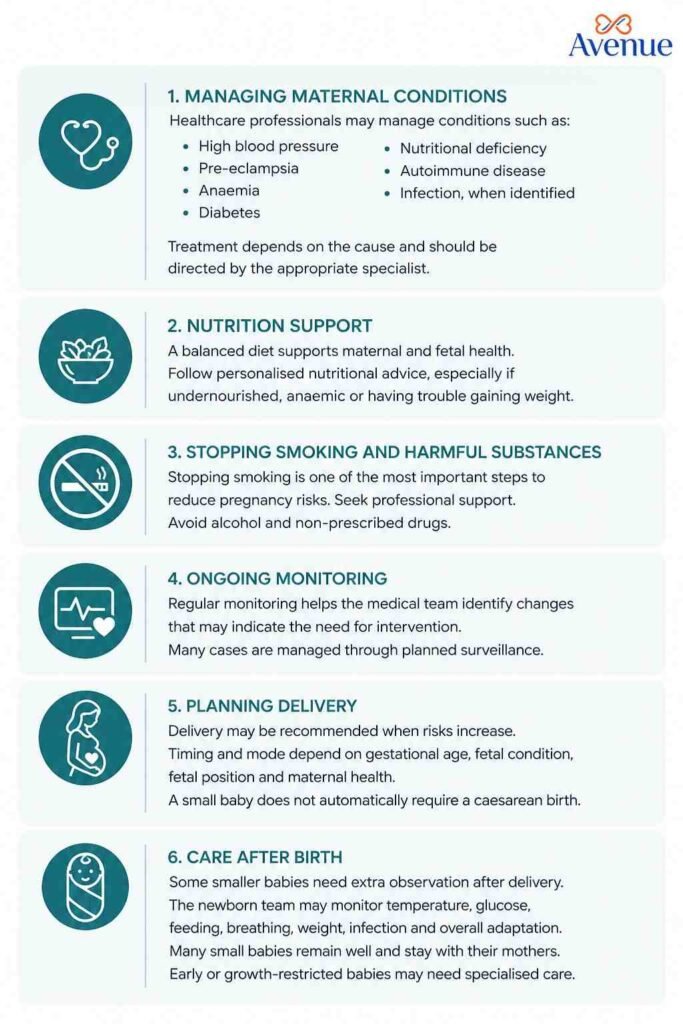
Treatment and Management Options
There is no single medicine that directly makes every growth-restricted baby grow faster. Management focuses on identifying contributing factors, supporting maternal health, monitoring the baby and choosing the safest time for delivery.
When Should You Contact a Healthcare Professional Urgently?
Seek urgent maternity assessment when there is:
- Reduced or absent fetal movement
- Vaginal bleeding
- Fluid leaking from the vagina
- Severe abdominal pain
- Strong contractions before the expected time
- Severe headache
- Blurred vision
- Sudden swelling of the face or hands
- Breathing difficulty
- Severe upper abdominal pain
- A feeling that something is not right
These symptoms do not always mean there is a serious complication, but they should be assessed promptly.
Conclusion
What Happens If Baby Growth Is Below Average? Some babies are naturally small, while others may have fetal growth restriction and need closer observation. Growth scans, Doppler studies, maternal health checks and fetal surveillance help healthcare professionals understand whether the baby is growing steadily and determine the safest plan for the remainder of pregnancy.
Parents should attend scheduled appointments, monitor fetal movements and seek prompt assessment when movement decreases or concerning symptoms occur. Access to appropriate prenatal evaluation and a pregnancy scanning centre in Thrissur can support informed decisions, timely follow-up and coordinated maternity care.
or additional information about pregnancy ultrasound scans during pregnancy, expectant mothers can refer to trusted medical resources that explain the purpose and timing of different prenatal scans.